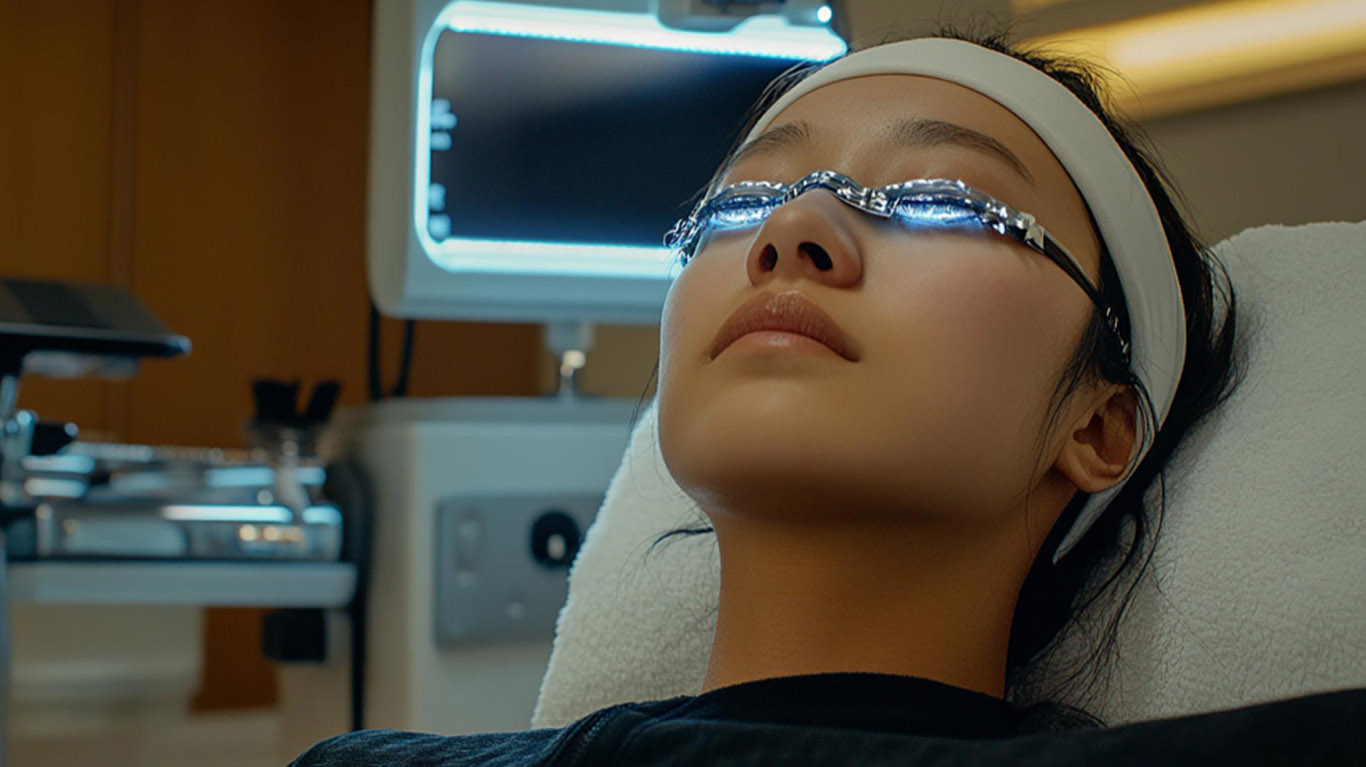
Photobiomodulation — the mechanism behind red light therapy — is one of the few wellness technologies with a genuinely respectable evidence base for pain. Specific wavelengths of red and near-infrared light are absorbed by cytochrome c oxidase in the mitochondria, improving cellular energy production and modulating the inflammatory response.
In practice, that means measurable relief for stubborn joint and muscle pain, particularly in knees, shoulders, and the lower back. The effect is real but it is cumulative: a single session under the panels is pleasant and largely uneventful. It is the tenth that people notice.
What it will not do is fix a mechanical problem. A torn meniscus, a badly impinged shoulder, or an unaddressed movement fault will not be resolved by light, and anyone who tells you otherwise is overreaching. Red light is an excellent adjunct to a rehab plan. It is a poor substitute for one.
The skin benefits — collagen support, tone, and texture — come along for the ride, which is why members treating a knee often notice their face looks better too.

Advanced laparoscopy and cancer surgeon, TEDx speaker, and director of the 200-bed NABH-accredited Jeevan Jyoti Hospital.